
June 25, 2026 | 6 min read
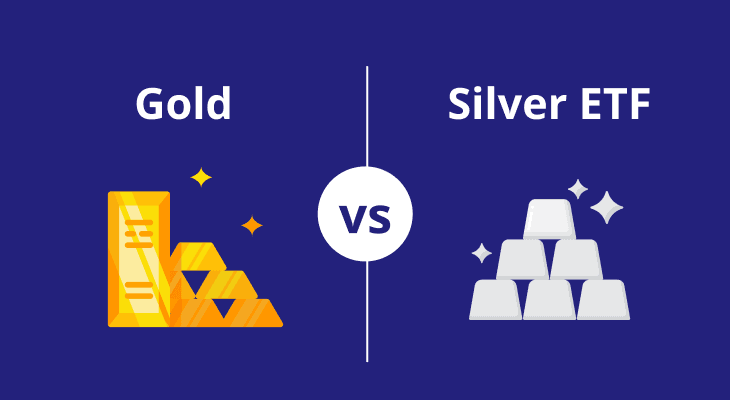
Gold vs Silver: Which ETF fits your portfolio better?
Gold and silver ETFs (exchange-traded funds) both give investors a convenient way to invest in precious metals without worrying about purity, storage, or making charges. However, they behave very differently inside a portfolio. Choosing between a gold ETF and a silver ETF depends on your risk appetite, investment horizon, and how you want to diversify.
Gold is traditionally seen as a ‘store of value’, hedge against inflation, and a shock absorber when equity markets fall. Silver, on the other hand, is part precious metal and part industrial metal. Its price is more closely linked to global growth, demand from manufacturing, EVs, solar panels, and electronics industries.
At a high level:
Gold ETF: More defensive, lower volatility compared to silver, works well as a hedge and diversifier.
Silver ETF: More cyclical and aggressive, can outperform in risk-on, industrial upcycles but also falls harder in slowdowns.
A sensible diversified ETF portfolio often uses gold as ‘core hedge’ and silver, if at all, as a smaller satellite allocation.
What are gold and silver ETFs?
Gold ETF is an exchange-traded fund that invests in physical gold of specified purity (usually 99.5% or higher) and aims to mirror domestic gold prices. Units are listed on the stock exchanges and priced in line with 1 gram gold or a fraction, depending on the scheme’s structure.
Silver ETF is similar in structure but invests in physical silver bars of specified purity, tracking domestic silver prices. An ETF’s NAV and market price move in line with silver prices.
Both silver and gold ETFs:
Trade like stocks on NSE/BSE during market hours.
Allow you to buy in small amounts.
Remove the hassles of storage, insurance, making charges and purity testing that come with physical bullion and jewellery.
How Gold and Silver ETFs work in India
Mechanics for both gold and silver ETFs are broadly similar:
A fund house creates an ETF scheme and appoints custodians to hold physical gold or silver in secure vaults.
Each ETF unit represents a fixed quantity of metal (say 0.5g,).
Market makers and authorised participants create or redeem units in large blocks against the metal, helping align ETF price with the underlying metal value.
You buy and sell units through your demat and trading account just like a stock, at live market prices.
Your return comes from:
Change in underlying metal price (gold or silver).
Minus fund expenses (Total Expense Ratio) and any tracking difference.
Minus your trading costs (brokerage, exchange charges, STT where applicable).
Gold ETF vs Silver ETF: key differences
Parameter | Gold ETF | Silver ETF |
Core driver | Safe haven demand, central banks, inflation hedge | Industrial demand + investment demand |
Volatility | Moderate for a commodity | Higher, sharper ups and downs |
Role in portfolio | Hedge / stabiliser | Return enhancer / tactical bet |
Liquidity (India) | Generally better, more established | Relatively new, liquidity improving but uneven |
Correlation with equities | Often low or negative during crises | Can move more in sync with risk-on phases |
In practice, gold tends to hold value better in crises, while silver can be more explosive in both directions.
Returns comparison: Gold ETF vs silver ETF
Over long periods, both gold and silver can deliver inflation-beating returns, but with significant cycles. Silver tends to outperform gold in strong economic expansions and commodity bull runs but underperform badly in slowdowns or risk-off periods. Gold has often provided more stable, smoother return profiles and has shone particularly in periods of financial stress, geopolitical tension, or very easy monetary policy. Silver may deliver higher peaks, but also deeper drawdowns, gold tends to provide more consistent ‘store of value’ characteristics.
Risk factors you should know before investing
Common risks (gold and silver ETFs)
Price volatility: Both are commodities, prices can swing sharply in the short term.
No cash flows: Unlike stocks or bonds, metals don’t generate dividends or interest income.
Tracking risk: ETF NAV can slightly deviate from benchmark price due to expenses and operational costs.
Liquidity risk: Very low-volume ETFs can have wider bid–ask spreads, increasing your effective cost.
Gold-specific risks
Long flat periods: Gold can go through multi-year phases of sideways returns.
Currency impact: INR movement against USD also influences domestic gold prices.
Silver-specific risks
Higher volatility: Silver often has bigger percentage swings than gold over short periods.
Industrial cyclicality: Demand is tied to sectors like electronics, solar, and EVs. A global slowdown can hurt prices.
Liquidity pockets: Some silver ETFs may still have lower trading volumes, leading to wider spreads.
Which ETF is better for your portfolio?
Think in terms of role and risk profile:
Conservative or moderate investor: Gold ETF usually fits better as a core hedge (5–15% of portfolio) to balance equity and debt.
Aggressive investor: Silver ETF can be a small tactical allocation (say within a 5–10% overall commodities bucket) to play growth and industrial cycles.
First-time precious metal investor: Starting with gold ETF is typically more sensible, silver can be added later if you understand the volatility.
You can also combine both:
Core: Larger allocation to gold ETF for stability and diversification.
Satellite: Smaller allocation to silver ETF for potential upside in strong growth/commodity cycles.
Taxation on Gold ETFs vs Silver ETFs in India
Tax treatment for gold and silver ETFs is the same because they are treated as ‘non-equity’ mutual funds for tax purposes under current rules (always verify latest tax norms or consult a tax professional):
Holding period:
Short term: If held for up to 12 months.
Long term: If held for more than 12 months.
Short-Term Capital Gains (STCG):
Taxed at 20%.
Long-Term Capital Gains (LTCG):
Taxed at a flat rate of 12.5% (as per current provisions at the time of writing).
There is no difference in tax rules between gold ETFs and silver ETFs, the difference is purely in behaviour and role, not taxation.
Gold ETF or Silver ETF: which ETF to choose?
Use these guiding questions:
What is my risk profile?
Low to moderate risk: Prefer gold ETF as primary precious metal exposure.
High risk: Can add silver ETF but in limited proportion.
What is my goal?
Hedge against inflation, currency and market stress: Gold ETF fits better.
Tactical play on industrial demand, green energy, and manufacturing cycles: Silver ETF is more suitable.
What is my time horizon?
Short term (less than 3 years): Be ready for volatility in both, especially silver.
Long term (5–10+ years): Gold is better suited as a steady hedge, silver can be a smaller, higher-beta component.
For most diversified ETF portfolios, gold ETF is usually the first building block, silver ETF is an optional add-on.
Conclusion
Gold ETFs work well as a strategic, long-term hedge and stabiliser in a diversified ETF portfolio.
Silver ETFs are more tactical, cyclical, and better suited to investors who can handle higher volatility and follow global macro trends.
Taxation for both is identical as non-equity funds, your choice should be driven by role and risk, not tax arbitrage.
A balanced approach for many investors is: gold ETF as core, silver ETF (if at all) as a smaller satellite holding.
More Related Articles

How Rising Oil Prices Impact Stock Market Investments
 October 9, 2026 | 0 mins read
A petroleum price hike, driven by rising global crude oil prices, can have far-reaching consequences for the economy and financial markets worldwide. As India imports over 88% of its crude oil requirements, understanding the impact of rising oil prices on stock market investments is essential for investors.
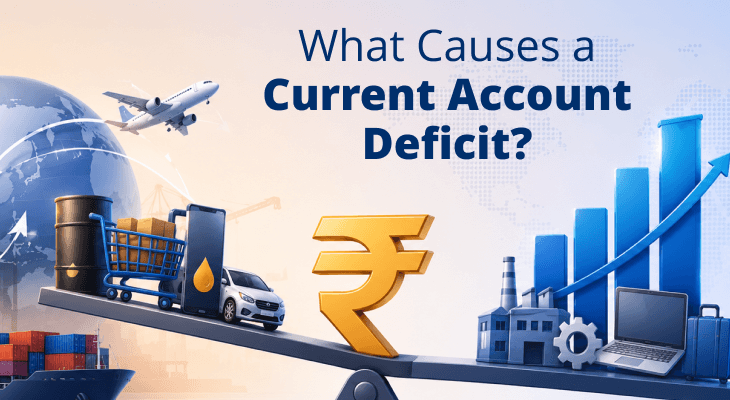
Understanding the meaning and impact of a current account deficit on an economy
October 9, 2026 | 0 mins read
The current account is an important component of a country’s balance of payments. A current account deficit occurs when a country’s total payments to the rest of the world exceed its total earnings from abroad. These payments include imports of goods and services, investment income paid to foreign investors, and current transfers. These earnings include receipts from exports of goods and services, income earned from overseas investments, and current transfers such as remittances. A country’s current account deficit is generally expressed as a percentage of its gross domestic product (GDP).

Revenge trading meaning explained: Causes, impact, and how to avoid it
October 9, 2026 | 0 mins read
in revenge trade, they are often driven by emotions such as anger, frustration, fear, or disappointment rather than sound analysis. In the process, they overlook carefully planned trading strategies designed around their financial goals, investment horizon, and risk appetite. More often than not, revenge trading results in further losses, creating a vicious cycle that becomes increasingly difficult to escape.
FAQ
Yes, silver ETFs generally carry higher price volatility than gold ETFs. Silver prices tend to move more sharply, both up and down, because a large part of demand comes from industrial uses, which are sensitive to economic cycles.