

May 21, 2026 | 5 min read
What are the key features of a full-service broker?
Understanding what a full-service stockbroker has to offer helps you make more informed choices about how you invest and manage your money. Many investors assume this model only suits high-net-worth individuals or those seeking constant handholding. In reality, the idea of full service has evolved.
As a top share broker, m.Stock offers several traditional features in a digital-first, cost-aware format. Let’s analyse these features clearly and see how m.Stock’s actual pricing and platform capabilities align with your trading needs.
What does a full-service broker actually do?
A full-service broker supports you throughout your investing journey and not just with order execution. This generally includes operational support, information access and structured investing assistance.
You can place orders through the web trading platform or app, while your broker acts as your digital back office and handles your settlement, demat credit, statements and regulatory reporting. This integration helps you avoid administrative friction and keeps all your records consistent.
And when execution, reporting and holdings stay connected, you can track performance seamlessly. This structure makes tax reporting or portfolio reviews much smoother.
How does personalised guidance influence better investment decisions?
One of the most recognised features of full-service SEBI-registered brokers is the personalised guidance they offer you. Here’s what you get:
- Matching investments with your goals: A structured discussion around your preferred time horizon, income stability and risk tolerance shapes the suitability of investment choices. This approach helps you avoid random or trend-driven decisions.
- Understanding your risks in real terms: Even well-planned portfolios can experience certain periods of decline. Thus, professional guidance can help you prepare for downside years alongside setting long-term growth expectations.
Why does research access define the full-service experience?
With the right research reports and tools, you can convert even market noise into structured information. This is why you need market commentary, sector insights and company-level analysis. These inputs help you understand the broader context, not just the price-movement data.
At m.Stock, our research access focuses on market data, insights and over 20 smart tools rather than traditional relationship-led reports. Take a look at how our tools enhance your trading experience with insights and ease of access:
- Watchlist Pro: You can execute orders in just 1-click, directly from your watchlist.
- Trading View Charts: You can also execute orders in real-time from the Trading View charts.
- Multiple Order types: You can access multiple advanced market order types such as Basket, GTT, Stop-loss, Cover Order, After Market Order, etc.
- Advanced Option Chain: You can utilise real-time option details to make your investment decisions.
- Sell Order Fast-tracking: In 1-click, you can activate DDPI and sell your holdings; there’s no requirement for authorisation every time.
Some of the top features of the best Indian stock brokers include smart tools such as a smart order form, 1-click account switching, corporate action alerts, and more.
Also Read: Know The Difference Between Full Service & Discount Brokerage Account
Are portfolio and wealth planning services important?
Full-service brokerage extends beyond just individual trades. The broader aim involves balancing your assets. Here’s how it helps you construct a well-diversified portfolio:
- Portfolio-related services: With portfolio construction and review services, your investments are spread across instruments to manage concentration risk. Furthermore, periodic reviews help you rebalance when market movements or personal goals change.
- Planning: Across different life stages, planning helps in retirement readiness, tax awareness, and long-term wealth organisation. Nevertheless, outcomes remain market-linked and subject to volatility.
How important is relationship management in today’s brokerage models?
Relationship support is an integral part of full-service brokerage. However, delivery formats in the modern trading systems now vary. For instance, the conventional models rely on branch visits and dedicated managers.
Whereas, m.Stock prioritises responsive digital support and intuitive tools instead of physical infrastructure. This digital support provides the required control and efficient access.
What investment products do full-service brokers usually offer?
With a wide variety of investment products, you can address all your distinct financial objectives. You can typically access these under one account:
- Equity shares
- Mutual funds
- IPOs and FPOs
- Debt and fixed-income instruments
On m.Stock, mutual fund investments involve zero commission, and you get access to direct plans and 2-click SIPs with 40+ AMCs and 3,500+ schemes. At the same time, equity delivery trades incur no brokerage and offer 20+ tools with real-time data.
As a trader, you get consolidated access. And managing investments under one platform simplifies monitoring, reporting and portfolio evaluation for you.
Where does m.Stock aligns with full-service broker features?
m.Stock does not operate as a traditional full-service broker. However, our platform incorporates several core features through our technology-led delivery.
You can access equities, mutual funds, IPOs, ETFs, and F&O through a single interface. Plus, the advanced tools like Watchlist PRO, Trade from Charts, basket orders and unified portfolio and positions view supports informed decisions.
Additionally, m.Stock charges flat ₹10 brokerage on all trades. We also offer 24/7 digital assistance to help you with all your queries in a timely manner.
How should you decide whether a full-service broker suits you?
The right choice depends on how much guidance you require from a broker and how actively you manage your own investment and trading decisions.
Do you prefer structured advice and physical interaction over independent research and digital convenience? If so, then traditional full-service brokers are better aligned with your needs.
However, if you value flexibility, strong research and execution tools, along with transparent pricing, m.Stock offers a balanced alternative.
Conclusion
A full-service broker comes with a comprehensive model that includes guidance, access and organisation. But today, platforms like m.Stock demonstrate how many of these features can exist seamlessly in a digital, cost-aware format with hassle-free access.
Do you want a platform that combines market access, advanced tools and clear pricing without unnecessary complexity? Open a demat account m.Stock, as our offerings may align well with your investing approach.
More Related Articles

How Rising Oil Prices Impact Stock Market Investments
 October 9, 2026 | 0 mins read
A petroleum price hike, driven by rising global crude oil prices, can have far-reaching consequences for the economy and financial markets worldwide. As India imports over 88% of its crude oil requirements, understanding the impact of rising oil prices on stock market investments is essential for investors.

Understanding the meaning and impact of a current account deficit on an economy
October 9, 2026 | 0 mins read
The current account is an important component of a country’s balance of payments. A current account deficit occurs when a country’s total payments to the rest of the world exceed its total earnings from abroad. These payments include imports of goods and services, investment income paid to foreign investors, and current transfers. These earnings include receipts from exports of goods and services, income earned from overseas investments, and current transfers such as remittances. A country’s current account deficit is generally expressed as a percentage of its gross domestic product (GDP).
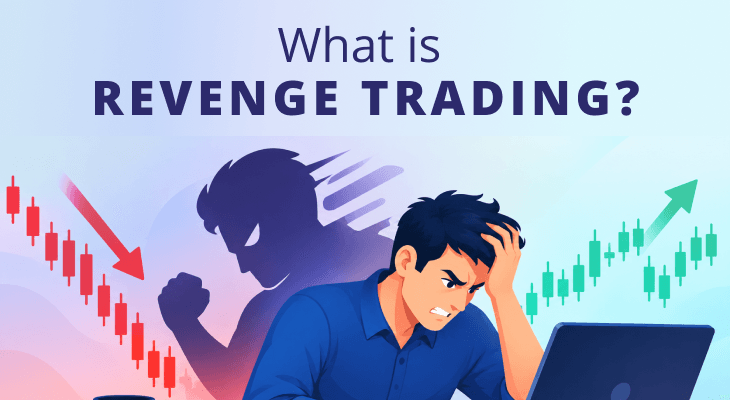
Revenge trading meaning explained: Causes, impact, and how to avoid it
October 9, 2026 | 0 mins read
in revenge trade, they are often driven by emotions such as anger, frustration, fear, or disappointment rather than sound analysis. In the process, they overlook carefully planned trading strategies designed around their financial goals, investment horizon, and risk appetite. More often than not, revenge trading results in further losses, creating a vicious cycle that becomes increasingly difficult to escape.