
May 21, 2026 | 5 min read
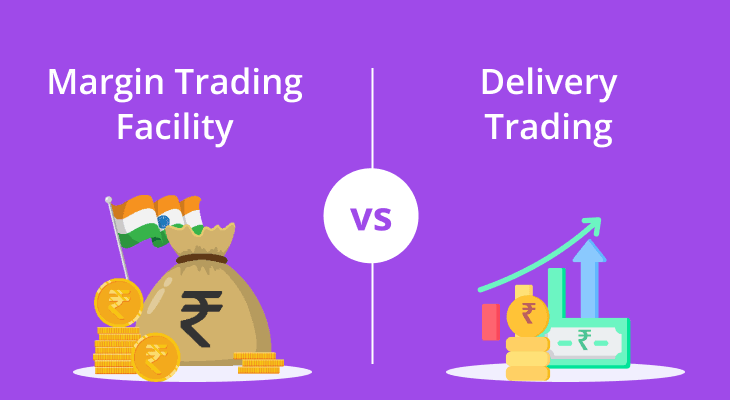
MTF vs delivery trading – which is better?
For new traders, the choice between Margin Trading Facility (MTF) and delivery trading can be confusing. They are both different trading methods with clear advantages based on your funding preference.
Your decision depends on multiple factors such as risk tolerance, trading frequency and the targeted investment horizon. Read on as we explain both approaches objectively so that you can decide which method fits your financial preferences better.
What does delivery trading involve?
Delivery trading means you are buying shares using 100% of your own capital. And since the shares are not blocked as collateral, you take full ownership of the shares which are delivered in your demat account. These shares can be held for any duration, from a few days to several years, depending on your conviction in the investment.
Delivery trading suits:
Unlike leveraged-based methods such as MTF, delivery trading does not rely on borrowed funds. It offers better control and stability, especially during extreme market volatility. This approach is best suited for investors who focus more on business fundamentals and long-term wealth creation.
Features of delivery trading:
- Requires the full payment of the share value upfront
- The shares remain in your demat account until you sell
- Exposure continues even during overnight market movements
- You also receive dividends and corporate benefits, where applicable
How does the margin trading facility (MTF) work?
The Pay Later (MTF) facility at m.Stock equips you to buy shares with the help of leverage. This boosts your effective buying power, even with limited personal funds. You are required to pay interest on the funded amount while maintaining a prescribed margin.
This structure improves capital efficiency, especially when you want exposure to a stock but prefer not to deploy full capital immediately. With m.Stock’s Pay Later (MTF), you can avail up to 80% margin, with the interest starting from 8.99%.
Features of Pay Later (MTF):
- Higher position size with limited upfront funds
- The ability to hold positions beyond a single trading day
- Daily interest is charged on the funded portion
- Shares are pledged as collateral until repayment
How does ownership differ between MTF and delivery trades?
When you buy shares and take delivery, they are transferred to your demat account, and you get complete ownership. With Pay Later (MTF), they remain pledged as collateral until you repay the funded amount or exit the position.
This does not dilute ownership of the assets, but adequate margin levels are mandatory to avoid automatic square-off by your broker.
Control with MTF
Delivery trades involve buying shares outright, which lets you hold them without worrying about borrowing costs or leverage. You can time the exits based on trading strategies and preferred timing.
On the contrary, Pay Later (MTF) gives you enhanced buying power and the flexibility to take larger positions. However, because MTF involves leverage, it requires active tracking and monitoring. If the margin falls below the threshold and additional funds are not provided, the broker may square off your positions.
Does risk exposure change with MTF compared to delivery?
Delivery trading exposes the funds only to the market price movements. As a result, any losses remain limited to your invested capital. Additionally, no automatic square-off can occur due to daily price volatility.
Pay Later (MTF) magnifies outcomes (both positive and negative) due to higher exposure. Margin shortfalls can also trigger forced liquidation in case additional funds are not added promptly to your trading account.
- Risk level: Delivery trading suits lower risk tolerance compared to MTF, which carries a higher short-term risk.
- Volatility action: Delivery trading allows patience during drawdowns, but MTF calls for a stricter stop-loss and exit discipline.
Do MTF and delivery trades fit different time horizons?
The time horizon of your investments is a decisive tool in equity trading. And that's regardless of margin or self-funded purchases. Delivery trading is favourable for long-term holding, as compounding and business growth are primary drivers of returns. This allows you to hold through cycles without any margin pressures.
Pay Later (MTF), as a concept, may fit shorter holding periods much better. MTF also works for your swing strategies because price movement plays out over days or weeks. Longer holding periods increase interest costs, which end up hampering the net profitability.
Here are the pointers to note:
- Investment horizon: Long-term goals better align with delivery trading, short to medium-term opportunities suit MTF.
- Monitoring: Delivery supports passive monitoring, MTF requires defined exit timelines.
Costs and interest accumulation: Do they matter?
Costs such as interest charges directly affect your choice of trading method. Especially if you are looking at long-term holdings. Here is why:
- Delivery trading: These trades come with no interest charges since funds are borrowed. Therefore, the return calculations become straightforward and the ongoing equity delivery charges remain minimal.
- Margin Trading Facility: With MTF, the interest charges will accrue daily on the funded amount. And over time, this cost can erode gains quietly, especially if price movement stays muted.
Does your experience level matter in MTF or delivery trading?
Delivery trading requires limited monitoring, hence is suitable for beginners or those who prioritise stability. MTF trades, on the other hand, require a specific skillset. To benefit from the MTF strategy, an understanding of margin mechanics and emotional discipline is required.
Consider delivery trading if you are investing for the long term and prefer predictability without frequent monitoring. Pay Later (MTF) is suited for traders who can actively monitor their positions and are comfortable with higher short-term risks.
Conclusion
Deciding what is better, using Pay Later (MTF) or delivery by funding the trades yourself depends on your comfort with risk. Delivery trades can help in steady wealth creation with lower stress, whereas Pay Later (MTF) offers capital efficiency but demands discipline and risk awareness. That is why many seasoned participants adopt a hybrid approach.
At m.Stock, you get the flexibility to choose either approach when required. You can open a trading account with us and get flat ₹10 brokerage on all trades and access MTF with m.Stock MTF charges starting from only 0.0246% interest per day. m.Stock allows you to align your choices with your financial goals seamlessly.
Also Read: Difference Between Margin & Leverage Trading | Mirae Asset
More Related Articles
How Long Can Beginners Hold Shares Using MTF?
 August 11, 2026 | 0 mins read
Many investors enter the stock market with strong conviction about certain stocks, but may not always have enough capital to buy the desired quantity outright. This is where Margin Trading Facility (MTF) has become increasingly popular in India.

How to Add Funds to Your MTF Position Easily?
August 11, 2026 | 0 mins read
Margin Trading Facility (MTF) has become a widely used trading feature among investors who want greater buying power in the stock market without paying the full transaction amount upfront. Instead of funding the entire purchase independently, you contribute an initial margin while the broker finances the remaining portion.
Margin Trading Facility (MTF) vs Personal Loan: Which is Smarter for Leveraged Investing?
July 3, 2026 | 0 mins read
Many investors reach a point where they want to invest more than their available capital. At that stage, you may consider borrowing to invest. Two common ways to do this are using a Margin Trading Facility (MTF) through your broker or taking a personal loan from a bank.