
February 13, 2026 | 8 min read
What Do You Mean By Redeemable Debentures?
Introduction to Redeemable Debentures
When you explore fixed-income investment options in India, you are likely to come across several instruments that offer predictable returns and a defined repayment structure. Among these, debentures occupy a significant position, especially for investors who prefer clarity on interest income and capital repayment. One important category within this broader group is redeemable debentures.
Redeemable debentures are widely used by Indian companies to raise medium- to long-term funds without diluting ownership. From an investor’s perspective, they offer a clear maturity date, a fixed interest rate, and a legal obligation on the issuer to repay the principal amount. This makes them suitable for those who seek stability rather than market-linked fluctuations.
In recent years, redeemable debentures have gained more attention due to tighter banking norms, rising corporate bond issuances, and increased participation by retail investors through digital platforms.
This blog explains what redeemable debentures are, how they work in practice, their key features, types, associated costs, advantages, risks, and their relevance for Indian investors today. The discussion is structured to help you make informed decisions, whether you are a first-time debt investor or reviewing your existing portfolio.
Also Read: What is an Investment Portfolio and How to Build it? | m.Stock
What Are Redeemable Debentures?
To understand redeemable debentures, you must first understand the basic nature of a debenture. A debenture is a debt instrument issued by a company to borrow money from investors. In return, the company agrees to pay interest at a fixed rate and repay the principal amount as per agreed terms.
Redeemable debentures are debentures that carry a fixed maturity date. This means the issuing company is legally required to repay the principal amount to you after a specified period. The repayment may happen in a single lump sum or through installments, depending on the terms mentioned in the offer document.
Unlike equity shares, redeemable debentures do not provide ownership rights. You do not receive voting rights or participate in the company’s profits beyond the fixed interest. However, you enjoy priority over shareholders in case of liquidation.
In India, redeemable debentures are governed primarily by the Companies Act, 2013, along with SEBI regulations for listed debentures. The law mandates that all debentures issued by companies must be redeemable, except in limited cases allowed under specific conditions. As a result, irredeemable debentures are rarely issued in modern Indian markets.
From an investor’s standpoint, redeemable debentures combine predictability with legal clarity. You know the interest rate, payment frequency, and the exact date when your invested capital will be returned, subject to the issuer’s creditworthiness.
Features of Redeemable Debentures
Redeemable debentures have several defining features that distinguish them from other debt instruments. Understanding these features helps you evaluate whether they align with your financial objectives.
Fixed Maturity Period
One of the most important features of redeemable debentures is the presence of a predetermined maturity date. This date is clearly stated at the time of issuance. On this date, the issuing company must redeem the debentures by paying back the principal amount to you.
The maturity period may range from a few years to over a decade. Shorter tenures usually carry lower interest rates, while longer tenures may offer slightly higher returns to compensate for time-related risks.
Fixed Interest Rate
Redeemable debentures typically offer a fixed rate of interest, also known as the coupon rate. This rate is decided at the time of issuance and does not change during the tenure of the debenture.
Interest payments may be made monthly, quarterly, half-yearly, or annually. In some cases, cumulative debentures defer interest payments and pay the accumulated amount at maturity.
Redemption Value
The redemption value refers to the amount paid to you when the debenture matures. This may be equal to the face value or higher.
Some redeemable debentures are redeemed at par, meaning you receive exactly the face value. Others are redeemed at a premium, where you receive an amount higher than the face value. The redemption terms are clearly mentioned in the debenture agreement.
Secured or Unsecured Nature
Redeemable debentures can be secured or unsecured.
Secured redeemable debentures are backed by specific assets of the issuing company. If the company fails to meet its obligations, these assets can be sold to repay investors.
Unsecured redeemable debentures do not carry any asset backing. In such cases, repayment depends entirely on the issuer’s financial health and credit profile.
Legal Obligation to Repay
Once issued, redeemable debentures create a binding legal obligation. Failure to pay interest or redeem the principal can lead to legal proceedings, including insolvency action under the Insolvency and Bankruptcy Code.
This legal enforceability is one reason why redeemable debentures are preferred over informal lending arrangements.
Types of Redeemable Debentures
Redeemable debentures can be classified into several types based on structure, security, and redemption terms. Knowing these types allows you to select instruments that suit your risk tolerance and income needs.
Fully Redeemable Debentures
Fully redeemable debentures are redeemed entirely at the end of the tenure. You receive the full principal amount in one payment on the maturity date.
These are commonly issued by established companies for long-term financing requirements.
Partly Redeemable Debentures
In partly redeemable debentures, a portion of the debenture value is redeemed at intermediate intervals, while the remaining amount is redeemed at maturity.
This structure allows companies to reduce repayment pressure while providing periodic capital returns to investors.
Secured Redeemable Debentures
These debentures are secured against tangible assets such as land, buildings, or machinery. From your perspective, secured redeemable debentures offer higher protection in case of default.
Due to lower risk, the interest rates on secured debentures are generally lower than unsecured ones.
Unsecured Redeemable Debentures
Unsecured redeemable debentures are not backed by collateral. They rely solely on the issuer’s creditworthiness.
To compensate for higher risk, these debentures often offer higher interest rates.
Callable Redeemable Debentures
Callable debentures allow the issuing company to redeem the debentures before the scheduled maturity date, subject to specified conditions.
While this gives flexibility to the issuer, it may limit your long-term interest income if the debentures are redeemed early.
Puttable Redeemable Debentures
Puttable debentures allow you, as the investor, to demand early redemption after a specified period.
This feature provides liquidity and protection against unfavourable interest rate movements.
Also Read: Difference Between Shares and Debentures | Mirae Asset
Cost of Redeemable Debentures
Understanding the cost of redeemable debentures is essential, especially if you analyse them from the issuers or investor’s perspective.
Cost from the Issuer’s Perspective
For companies, the cost of redeemable debentures includes the interest payable and any redemption premium.
Interest paid on debentures is treated as an expense and is tax-deductible under Indian tax laws. This makes debentures a cost-effective financing option compared to equity.
For example, if a company issues redeemable debentures worth ₹10 crore at an interest rate of 8 percent per annum, the annual interest cost is ₹80 lakh. If redeemed at a 2 percent premium, an additional ₹20 lakh is payable at maturity.
Cost from the Investor’s Perspective
For you as an investor, the cost of redeemable debentures includes opportunity cost, inflation impact, and tax liability on interest income.
Interest earned is taxable as per your income tax slab. Capital gains tax may apply if you sell listed debentures before maturity.
Therefore, when evaluating returns, you must consider post-tax income rather than headline interest rates.
Yield Considerations
The effective yield depends on the purchase price, interest rate, redemption value, and holding period.
Debentures purchased at a discount or redeemed at a premium can offer higher effective yields compared to those issued at par.
Advantages for Investors
Redeemable debentures offer several benefits that make them suitable for conservative and moderate-risk investors.
Predictable Income
You receive a fixed stream of interest income at regular intervals. This predictability helps in financial planning, especially if you rely on investment income.
Capital Repayment Assurance
The defined maturity date ensures that your principal is scheduled to be repaid, subject to issuer solvency.
Lower Volatility
Redeemable debentures are not directly affected by daily market fluctuations, making them less volatile than equities.
Portfolio Diversification
Including redeemable debentures in your portfolio helps balance risk, especially if you already hold market-linked instruments.
Also Read: Portfolio Diversification: How it reduces Market Volatility and Risk? | m.Stock
Priority in Liquidation
In case of liquidation, debenture holders are paid before equity shareholders, improving recovery prospects.
Risks and Limitations of Redeemable Debentures
Despite their benefits, redeemable debentures are not risk-free. You must be aware of potential limitations.
Credit Risk
If the issuing company faces financial stress, it may default on interest or principal payments.
Checking credit ratings from agencies such as CRISIL, ICRA, or CARE is essential before investing.
Interest Rate Risk
If market interest rates rise, the value of existing fixed-rate debentures may decline, especially if you plan to sell before maturity.
Inflation Risk
Fixed interest payments may lose real value during periods of high inflation.
Liquidity Risk
Unlisted redeemable debentures may be difficult to sell before maturity.
Conclusion
Redeemable debentures represent a structured and legally enforceable debt instrument that serves the interests of both companies and investors. For companies, they provide access to capital without ownership dilution and with tax-efficient interest costs. For you as an investor, they offer predictable income, defined repayment timelines, and relatively lower volatility.
However, like all fixed-income instruments, redeemable debentures require careful evaluation of credit quality, tenure, tax implications, and liquidity. When selected thoughtfully, they can play a meaningful role in building a stable and balanced investment portfolio suited to Indian market conditions.
Also Read: Debentures Meaning, Types & Features Explained in Detail | m.Stock
More Related Articles
ETF trading rules from 7 September: What changes for retail investors?
 September 7, 2026 | 0 mins read
If there was no trade during the final 30 minutes on the previous day, the exchange will use that day’s last traded price. If there was no trade at all on the previous day, the latest available closing NAV will be used. The base price will also be adjusted for corporate actions, if applicable. From April 1, 2027, SEBI expects stock exchanges and mutual fund AMCs to use the previous day’s closing NAV as the base price after resolving operational issues.

How MSCI rebalancing tested India's Closing Auction System on August 31
September 2, 2026 | 0 mins read
India’s new Closing Auction Session (CAS) processed a record ₹39,718 crore turnover, on 31 August 2026 as MSCI India Index latest index rebalancing took effect at the market close. The event showed that CAS could handle an exceptional concentration of institutional flow. However, there were some sharp, and sometimes counterintuitive, stock moves. This shows that the quality of closing-price discovery is still being tested.
How Traders Use Maximum Drawdown to Manage Portfolio Risk?
August 19, 2026 | 0 mins read
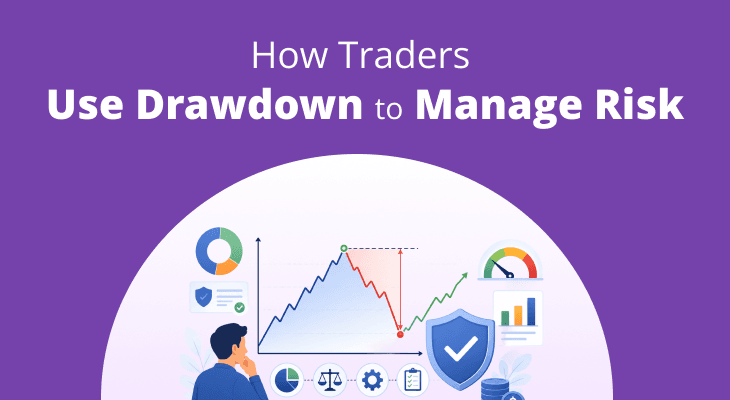
When evaluating an investment or trading strategy, returns usually receive the most attention. However, returns alone do not tell investors how much risk was taken to achieve them. Two portfolios may deliver the same annual return, but one may have experienced far steeper losses during market downturns. This is where max drawdown becomes useful. It measures the largest decline in the value of a portfolio, trading account, or investment from its highest point to its lowest point before a new peak is reached. Instead of focusing only on profits, it shows the worst historical loss an investor would have experienced by staying invested.
FAQ
The primary difference lies in the repayment structure. Redeemable debentures have a clearly defined maturity date, and the issuing company is legally obligated to repay the principal amount on that date. Irredeemable debentures, on the other hand, do not have a fixed maturity period and are typically repaid only when the company is liquidated or wound up.