
January 13, 2026 | 7 min read
Day Trading Explained: Beginner’s Guide to Stocks and Strategies
The trading world has many terms, and before stepping into this world, a good knowledge of different forms of trading terminology is a must. For example, if you are exploring the idea of day trading, it’s vital to understand exactly how it works, what tools you’ll need, and what you’re getting into. Day trading involves buying and selling securities within a single trading day, navigating rapid market moves, and using the right strategy.
Whether you’re intrigued by day trading stocks, curious about a day trading platform, or just wondering what is day trading approach is, this guide will walk you through the top methods, risk management, and how to begin thoughtfully.
What is Day Trading?
Day trading refers to buying and selling financial instruments such as stocks within the same market day. This trading will require you to open and close positions before the market closes, avoid overnight holdings, and accept the associated risks. Being a day trader, your objective should be to use short-term price fluctuations rather than long-term trends.
When you trade with this approach, the focus shifts from long-term company performance to short-term price movements over minutes or hours. Moreover, having only theoretical knowledge is not sufficient to begin day trading; quick decision-making, consistent discipline, real-time market updates, and a dependable trading platform are also important. The timing for day trading is between 9:15 AM to 3:30 PM, from Monday to Friday.
How Does Day Trading Work?
Day trading focuses on short-term market movements rather than long-term price growth, aiming to profit from small price changes.
Here’s how the process generally works:
- Choose suitable stocks: Begin by selecting day trading stocks with high liquidity and active trading. This ensures you can enter and exit positions quickly without struggling to find buyers or sellers.
- Use a trading platform: A good day trading platform provides live charts, fast order execution, and real-time market data. This helps you monitor price action and make timely decisions.
- Identify an opportunity: Look for signals such as patterns, volume spikes, or news updates that suggest a potential price move. Doing so will help you to act when the probability of a meaningful price shift is higher.
- Plan your trade: Before beginning the trading, set rules to plan everything smoothly, including where to buy, when to exit, and how much loss you are willing to accept. Plan all these based on your financial objective.
- Execute and manage: Once the order is placed, keep an eye on how the trade progresses. If the price moves in the opposite direction, the stop-loss you set helps limit potential losses and safeguard your capital.
- Close before the market ends: It is advisable to complete all trades before the market closes to avoid overnight risk, unexpected price gaps, or news events that may affect value.
Step-by-Step Guide for Day Trading
If you’re new to day trading, having a structured approach can help you navigate the process with confidence. Instead of making decisions based on impulse, a clear plan keeps you focused and reduces unnecessary risk. Below is a step-by-step guide to help you begin in a steady and organised way:
- Educate yourself: Learn the fundamentals of the market, including how shares work, how to read charts, and how to understand trading costs.
- Pick a reliable day trading platform: Choose a brokerage with a strong interface, good execution speed, and low fees.
- Set up your account and capital: Ensure your trading account has a sufficient balance, review any applicable margin requirements, and confirm that the amount you plan to risk aligns with your comfort level.
- Choose stocks to trade: Start by focusing on highly liquid stocks where buying and selling are easier. Avoid illiquid or extremely volatile shares, particularly if you are new to day trading.
- Define your strategy: Define your entry and exit strategy in advance. Decide at what price you will book profits, and identify the level at which you will place a stop-loss to manage risk effectively.
- Begin with small positions: Start with a manageable position size and ensure you are comfortable with the potential loss before entering a trade.
- Track your results and refine: Evaluate every trade to understand the outcome, identify what contributed to success or mistakes, and refine your strategy based on those insights.
- Manage your risk actively: Use stop-loss orders to protect against unexpected moves, keep your number of trades manageable, and avoid committing a large portion of your capital to any single position.
Common Day Trading Strategies
Here are some of the most used day trading strategies:
Scalping Trading
Under this strategy, you place multiple quick trades within a short time frame, aiming to capture small price movements and accumulate profit through frequent, rapid transactions.
Momentum Trading
This is one of the day trading strategies that focuses on buying stocks that are already moving upward and selling those that are losing momentum. You follow market trends, aiming to benefit from continued price movement rather than holding positions for long periods.
Range Trading
This day trading strategy involves buying near support levels and selling near resistance when prices move within a defined range. It works best in stable markets where price patterns remain consistent without strong trends.
News-based Trading
This approach involves making trading decisions based on market-moving news such as earnings announcements, government policies, or economic updates.
Breakout Trading
This strategy focuses on entering a trade when the price moves beyond a defined support or resistance level. The goal is to capture momentum as the price continues in the breakout direction.
Key Terms Every Day Trader Should Know
To trade effectively on a day-to-day basis, you’ll need to understand several terms that will help you navigate day trading stocks more confidently:
- Liquidity: This refers to how easily you can buy or sell a stock without affecting its market price.
- Spread: The difference between the highest price a buyer is willing to pay (bid) and the lowest price a seller is willing to accept (ask). A smaller spread generally results in lower trading costs.
- Stop-loss: An automatic order that sells a stock if it reaches a specified price, helping you limit potential losses during sudden market moves.
- Leverage or Margin: This means using borrowed funds to increase your trade size. It can amplify profits, but it also increases the risk of larger losses.
- Position Sizing: This is how much of your capital you commit to a single trade. Managing it well is crucial for controlling overall risk.
- Slippage: This happens when your order executes at a price different from what you expected, often during fast or volatile market conditions.
- Volatility: This measures how quickly and how much a stock’s price can change. Higher volatility can create more opportunities for profit but also carries higher risk.
Tips for Managing Risk in Day Trading
Since day trading involves rapid decisions and frequent trades, risk management is critical. Here are some key tips that you must keep in mind while involving yourself in day trading stocks:
- Set a daily loss limit to stop trading once it's reached. This helps prevent emotional decisions and protects your capital.
- Use stop-loss orders before entering trades to limit potential losses if the price moves against you.
- Avoid overleveraging because increased exposure can magnify losses as quickly as gains.
- Always trade with a clear plan that includes your entry point, exit target, and acceptable loss level.
- Risk only a small percentage of your total capital per trade, often around 1 to 2%.
- Check overall market conditions, as volatility, news events, or low liquidity can affect trade execution.
- Keep emotions in control and avoid trading based on excitement, frustration, or fear
- Maintain a trading journal to review performance, refine strategies, and identify areas for improvement.
Also Read: Day Trading vs Swing Trading: Know The Difference
More Related Articles
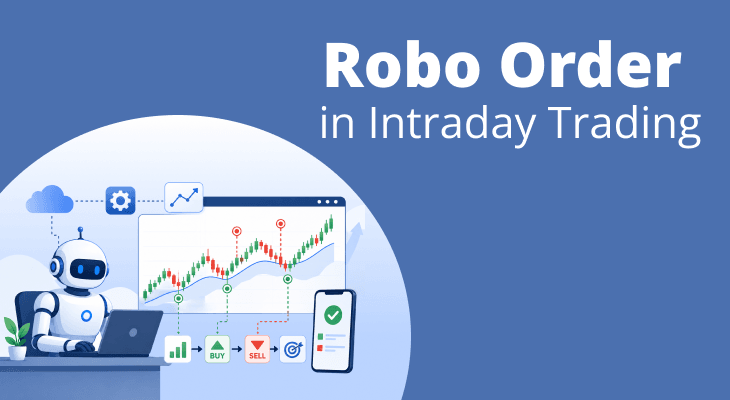
What Is a Robo Order in Intraday Trading?
 August 19, 2026 | 0 mins read
Intraday trading often requires quick decision-making and timely execution. A delay of even a few seconds can affect trade outcomes, particularly in fast-moving markets. To address this challenge, many trading platforms offer automated order execution features that help traders manage entries, exits, and risk parameters more efficiently. One such feature is the robo order.

Advantages of Leverage Trading
May 22, 2026 | 0 mins read
Leverage is an important concept in the stock market, that every trader should be aware of. It is a powerful tool that can help multiply your investment potential and returns. But what is leverage and why do traders choose to use it? Here’s everything you need to know about the concept of leverage and its various advantages.
How to Calculate Brokerage Charges in Intraday Trading
February 19, 2026 | 0 mins read
Intraday trading is a crowd-favourite, especially among stock market beginners. The constant tussle between buyers and sellers brings forth lucrative investment opportunities which are too good to pass. But high brokerage on intraday trading often eats into investors' profits and reduces their overall return on investment (ROI). This is why you must learn how to calculate brokerage on intraday trading to make better trading decisions.
FAQ
The minimum capital required for day trading varies by broker and trading style, but you should have enough to cover margins, manage risk, and handle volatility. Many traders begin with ₹25,000–₹50,000, though higher capital provides better flexibility and position management.