
July 1, 2026 | 20 min read
How to Review and Rebalance Your Portfolio?
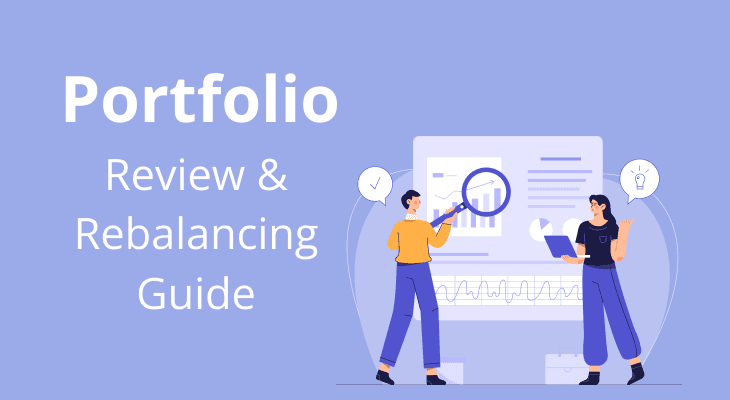
A portfolio review is like a health check for your investments. It keeps your portfolio aligned with your goals and risk level, instead of letting it drift with the markets over time.
If you invest regularly in the markets, either through SIPs and lumpsum into mutual funds and ETFs, markets move, new investments get added, and your life situation changes. A periodic portfolio review helps you see whether your current mix of assets still matches your goals and risk appetite.
Without regular portfolio review, even a well‑planned portfolio can drift into a riskier or more conservative mix than you intended or stay loaded with underperforming investments. A simple portfolio health check helps you spot concentration, check performance against realistic benchmarks, and make thoughtful changes instead of reacting to headlines.
How to Review a Portfolio
You can treat a portfolio review as a short, repeatable process rather than a one‑off clean‑up.
Check performance versus your goal and a benchmark: Compare 1‑3 year returns of each holding with a suitable index or category average, not just with the absolute number in your statement.
Review asset allocation: Compare your current split between equity, debt, and other asset classes with the target mix you started with. If equity has run up from 60% to 72%, you may need rebalancing.
Assess risk and concentration: Look for outsized exposure to one stock, sector, theme, or asset class that can hurt if it turns badly.
Decide actions: Trim or replace persistent underperformers that no longer fit your plan, not based on short‑term noise.
How to Review a Portfolio?
Step | Question to Ask | Possible Action |
|---|---|---|
Performance | Is this fund or stock lagging over the past 3 years? | Hold if gap is small and recent, else consider rebalancing actions. |
Allocation | Has equity or any asset moved far from my target %? | Rebalance by selling some overweight allocations and adding to underweight ones. |
Risk | Concentration in one sector, theme, or stock? | Gradually reduce concentration. |
Fit | Does this holding still match my goal and timeframe? | Exit or reduce if goal or risk level has changed. |
Importance of Portfolio Management Over Time
Portfolio management is not a one‑time event at the start of your investing journey. It is an ongoing process where you periodically align your investments with life events such as marriage, home purchase, education goals, or retirement planning.
Regular portfolio management helps you manage risk in changing markets, capture opportunities without overtrading, and keep your path to long‑term goals realistic. It is like maintaining a car: small and periodic servicing avoids breakdowns later.
Signs Your Portfolio Needs a Review
You should treat these as red flags that it is time for a portfolio health check:
Your asset allocation has drifted significantly. For example, equity allocation moving from 60% to 75% after a market rally.
You hold many funds that look similar and you are unsure why each is there in your portfolio.
One or two stocks or funds make up a very large part of your portfolio.
Your goals or income have changed, but your investments look the same as 3 years ago.
You feel uneasy about volatility or are tempted to react to every market move.
What Is a Portfolio Health Check?
A portfolio health check is a structured review of your investments, like an annual health test for your finances. It checks performance, risk, diversification, tax impact, and whether your investments are still aligned with your goals.
Some investors use a worksheet or checklist that covers returns versus targets, risk comfort, asset allocation, and major life changes. You can also use online tools or advisory platforms that give a portfolio score, highlight concentration, and suggest rebalancing ideas.
What to Check During a Portfolio Review?
Item | Review Criteria | What To Look For |
|---|---|---|
12‑Month Return | Compare to inflation and index | Is your portfolio able to keep pace with benchmark returns? |
Equity Allocation | Actual vs target | Big gap means rebalancing may be needed. |
Top 5 Holdings | Proportion of portfolio | Very high % in a few names signals concentration risk. |
Goal Alignment | Adherence to financial goals | Outdated goals lead to outdated portfolio logic. |
How Often Should You Do a Portfolio Review?
Many advisors suggest doing a detailed investment portfolio review at least once a year, with lighter check‑ins once a quarter. An annual review is a good time to look at asset allocation, performance, tax impact, and whether your life situation has changed.
Quarterly check‑ins can be simpler, such as checking balances and seeing whether any holding has suddenly become too large or too small. Reviewing too often can tempt you to react emotionally, while reviewing too rarely can let problems grow unnoticed, so a balanced rhythm works best.
Stock Portfolio Review Online
Many investors now prefer to do a stock portfolio review using a online broker platform like m.Stock, aggregators, or independent tools. These platforms can automatically pull in your holdings, show overall allocation, and flag heavy exposure to specific sectors or stocks.
Some tools provide charts comparing your stock or mutual fund returns with relevant benchmarks and category averages and may suggest diversification ideas or tax‑loss harvesting opportunities. You can still choose your own actions, but the analytics make it easier to spot gaps quickly.
Regular portfolio review is essential if you want your investments to stay in line with your goals instead of drifting with the market. A structured portfolio health check, done at least once a year and supported by online tools if needed, helps you manage risk, replace chronic underperformers, and keep your overall portfolio on track over the long term.
More Related Articles
Gold vs Silver: Which ETF fits your portfolio better?
 June 25, 2026 | 22 mins read
Gold ETF is an exchange-traded fund that invests in physical gold of specified purity (usually 99.5% or higher) and aims to mirror domestic gold prices. Units are listed on the stock exchanges and priced in line with 1 gram gold or a fraction, depending on the scheme’s structure. Silver ETF is similar in structure but invests in physical silver bars of specified purity, tracking domestic silver prices. An ETF’s NAV and market price move in line with silver prices.

How active ETFs bridge passive affordability with expert skill
June 15, 2026 | 11 mins read
An active ETF is an exchange-traded fund where a professional fund manager takes active decisions on what to buy, what to sell, and how much to allocate to each stock or bond. The fund still trades on the stock exchange like any other ETF and investors buy or sell units during market hours through a demat and trading account. Unlike a traditional index ETF, an active ETF does not track a fixed index. The manager aims to beat a benchmark or deliver a specific outcome while still offering the ETF format’s cost efficiency, transparency through daily holdings disclosure in many cases, and trading flexibility.
What Is Multi Commodity Exchange (MCX) in India?
June 15, 2026 | 10 mins read
The Multi-Commodity Exchange (MCX) is India’s largest platform for trading commodity derivatives. It allows market participants to buy and sell contracts linked to commodities such as gold, silver, crude oil, natural gas, and several base metals. Instead of trading physical commodities directly, traders on the multi-commodity exchange deal in standardised contracts known as MCX futures. These contracts represent an agreement to buy or sell a specific quantity of a commodity at a predetermined price on a future date.
FAQ
Most investors can aim for a detailed portfolio review once a year and lighter check‑ins once a quarter, unless there is a major life or market event that demands a closer look.