

January 13, 2026 | 9 min read
What Is Protective Put Strategy In Options Trading?
Understanding Protective Put Strategy
In the world of option trading, you come across many strategies that help in either speculating on price movements or in managing risk. A protective put is one such strategy used to protect your holdings while still allowing for growth.
A protective put combines two positions:
- Long position in the underlying asset (for example, shares of a company).
- Long position in a put option on that same asset.
By doing this, you are bullish on the asset (hope its price will rise) but you want protection in case the price falls significantly. The put option gives you the right, but not the obligation, to sell the asset at the chosen strike price on or before a specified expiry date.
The cost of acquiring that protection is the premium you pay for the put option.
You will often see “protective put” also called “married put” because you own the stock and the put together. This strategy is commonly used by investors on option trading platforms or via brokerages. It is relevant when you expect potential volatility or downside risk in the market but do not want to sell your positions.
How Does A Protective Put Work?
To understand how protective put works, you need to consider:
- Underlying asset: the stock (or other asset) you own.
- Strike price: the price at which you can sell the asset if you exercise the put option.
- Premium: what you pay for the option.
- Expiry date: when the option contract lapses.
Here is the process:
- You already hold shares of a company (or plan to). Suppose you bought shares of XYZ Ltd at ₹400 each. You believe the share may go up over time but you are uncertain about possible market declines.
- To limit potential losses, you buy a put option for XYZ Ltd with, say, strike price ₹380 and expiry in three months. Suppose the premium for that put option is ₹10 per share.
- Outcomes:
- If the share price goes above ₹400 (or higher than ₹380), you might not exercise the put. It will expire worthless, but you benefit from the share appreciation. Your loss is limited to the premium (₹10 per share), plus any difference between your purchase price and cost of premium when you count total investment cost.
- If the share price falls below ₹380 before or at expiry, you can exercise the put, sell the shares at ₹380 despite market price being lower. So your maximum loss is capped: the difference between your purchase price (₹400) and strike price (₹380), plus the premium you paid (₹10). That amounts to a loss of ₹30 per share (₹20 fall + premium). Without the put, your loss could be much greater.
- Since the put gives you the right, but not the obligation, you have flexibility. You retain upside potential, which means if the stock rises significantly, you participate fully (minus premium cost).
Features affecting how a protective put works:
- Whether it is in-the-money (ITM), at-the-money (ATM), or out-of-the-money (OTM). An ITM or ATM put gives stronger protection but costs more.
- Longer term expiry increases cost (premium), but gives more time for adverse events; shorter expiry costs less but offers protection for less time.
- Higher implied volatility increases the cost of put options because risk of large price swings is greater.
Also Read: Option Moneyness Explained: ITM, ATM & OTM Options
When Is a Protective Put Strategy Used?
Understanding when to use a protective put is critical if you want to use option trading platforms or any brokerage effectively. You might consider a protective put in the following situations:
- You hold a long-term position in a stock or other asset that you believe in fundamentally (you expect growth), but you are concerned about short-term declines due to general market risks (macro‐economic, political, policy changes, etc.).
- When volatility is rising or expected to rise, because uncertain conditions may bring down prices significantly. Protective put helps to limit the damage in those uncertain times.
- Around events that may impact the stock badly (earnings, regulatory changes, mergers, etc.), but you prefer not to sell the stock because you want the upside if things go well.
- If you are risk-averse and wish to preserve capital, especially when a large part of your portfolio is in equities, rather than exposing all of it to downside.
- When using option trading platforms, sometimes you want to maintain exposure to potential gains but want to manage risk. A protective put allows you to do both: keep exposure and reduce risk.
It is not always cost-efficient to use protective puts. If the cost (premium) is high relative to expected benefit, or if you expect minimal downside risk, you might choose a different strategy.
Choosing Strike Price & Expiry
Two of the most important parameters when you design a protective put strategy are the strike price of the put option, and the expiry date. Your choices here affect how much protection you get, how much premium you pay, and how likely the protection is to matter.
Strike Price
- At the Money (ATM): The strike price is near the current market price of the stock. This gives you stronger protection as it limits loss even if the stock falls immediately. But ATM puts are more expensive (premium is higher).
- Out-of-the-Money (OTM): Strike price is below current market price. These cost less, so you pay a smaller premium, but protection is weaker; only kicks in if stock drops below that lower strike.
- In-the-Money (ITM): Strike is above current market price (rare in protective put usage, because you are already losing money). The ITM option gives very strong protection but the premium is high. Often not cost-efficient unless risk of further decline is large and imminent.
Expiry (Time Horizon)
- Short-term expiry: Gives protection for a limited time. Premium is lower, but protection ends soon. If the market falls after expiry, you are exposed again.
- Medium-term / Long-term: Covers you for longer. Premium is higher because time value is greater. Also the risk of time decay of premium (theta) is larger - if nothing happens, you lose premium gradually as expiry approaches.
- Balance: You choose expiry based on how long you believe the risk may last. For example, if there are elections or policy changes expected in three months, you might choose a three-month expiry.
Cost vs Benefit Trade-off
The more protection (strike near current price, longer expiry), the higher the premium. So you must evaluate whether that cost is justified by the level of risk you expect. Also, liquidity and open interest of the option series matter: options with low liquidity have wider bid-ask spreads, making entering/exiting more expensive. So when you choose strike and expiry, consider whether the option is actively traded.
Example of a Protective Put Trade
Suppose you hold shares of XYZ Ltd.
- You own 100 shares, purchased at ₹ 2,600 per share. So your total investment is ₹ 2,60,000.
- You are concerned about possible declines over the next two months due to global crude oil price uncertainty or regulatory risk.
You check the options market and find a put option with:
- Strike price: ₹ 2,500
- Expiry date: 2 months ahead
- Premium: ₹ 70 per share
So, if you buy one put for 100 shares, the cost = ₹ 70 × 100 = ₹ 7,000.
Now, possible outcomes:
Scenario | Share Price at Expiry | Action | Result per Share |
|---|---|---|---|
Share price rises to ₹ 2,900 | Let put expire worthless | You enjoy gain of (₹ 2,900 − ₹ 2,600) = ₹ 300 per share, minus premium ₹ 70 → ₹ 230 net gain | ₹ 230 × 100 = ₹ 23,000 net profit |
Share price stays around ₹ 2,600 | Put likely worthless, mild loss | Loss is only premium: ₹ 70 per share → ₹ 7,000total loss |
|
Share price falls to ₹ 2,200 | Exercise put; sell at ₹ 2,500 | Loss per share = (₹ 2,600 − ₹ 2,500) = ₹ 100, plus premium ₹ 70 → ₹ 170 per share loss | ₹ 17,000 total loss |
So, maximum loss is ₹ 17,000, even though the share falls by ₹ 400. Without put, you would lose ₹ 40,000 if the share dropped to ₹ 2,200. This shows how protective put limits downside while allowing reasonably large upside.
Benefits of Protective Put Strategy
- Downside Protection: You set a floor below which losses cannot go beyond a known limit. This helps preserve capital and limits downside risk.
- Upside Participation: If the asset’s price rises sharply, you benefit fully (minus the premium). You do not give up upside like some strategies do (e.g. selling calls).
- Flexibility: Since the put gives you the right but not the obligation, you can decide not to exercise it if conditions are favourable.
- Reduced stress: Knowing that losses are capped can help you stay invested rather than panic sell during volatility.
- Strategic Hedging: If you expect certain risk periods. For example, policy announcements, elections, regulatory changes, you can hedge just for that period, by selecting suitable expiry.
- Useful even for long-term investors: Even if you have a long horizon, occasional protective puts can guard major holdings temporarily and allow you to hold through downturns rather than having to exit.
Drawbacks of Protective Put Strategy
- Premium Cost: The premium you pay can be expensive, especially for ATM or ITM puts, or those with long expiry. The cost reduces overall return.
- Time Decay (Theta): Options lose value as expiry approaches, other things equal. If there's no price drop, the put may lose value steadily and expire worthless, so you lose the premium.
- Opportunity Cost: Since you are paying premium, your capital invested in the stock plus premium could have been used elsewhere. Also, if the stock moves sideways or modestly up, the net gain after premium may be modest.
- Strike & Expiry Mis-selection Risk: If you choose strike too low (OTM), you might end up not being sufficiently protected if price falls somewhat but not below strike. If you choose expiry too short, the protection may lapse before a bad event occurs.
- Liquidity and Slippage: Some puts may have low open interest or low trading volume; entering or exiting the option leg might cost more due to spreads. On option trading platforms, you might find higher transaction costs.
- Premium Outlay Means Small Loss Even If Asset Is Strong: If the stock goes up, but not by very much relative to premium paid, you may find that net return (after subtracting premium) is less impressive.
Conclusion
Protective put is a powerful strategy in option trading that lets you combine growth potential with risk control. For you, as an Indian investor, it offers a way to safeguard holdings during uncertain times without giving up upside returns. However, its effectiveness depends heavily on the strike price chosen, the expiry, the cost of premium, volatility, and selecting a good option trading platform.
If you are cautious about downside risk and want to avoid large losses, protective puts are worthy of attention. But if premiums are too high relative to your risk tolerance, or if you expect markets to behave calmly, they might not be the most cost-efficient route.
Also Read: What are Futures and Options and Its Benefits? | m.Stock
More Related Articles
How Traders Use Maximum Drawdown to Manage Portfolio Risk?
 August 19, 2026 | 0 mins read
When evaluating an investment or trading strategy, returns usually receive the most attention. However, returns alone do not tell investors how much risk was taken to achieve them. Two portfolios may deliver the same annual return, but one may have experienced far steeper losses during market downturns. This is where max drawdown becomes useful. It measures the largest decline in the value of a portfolio, trading account, or investment from its highest point to its lowest point before a new peak is reached. Instead of focusing only on profits, it shows the worst historical loss an investor would have experienced by staying invested.
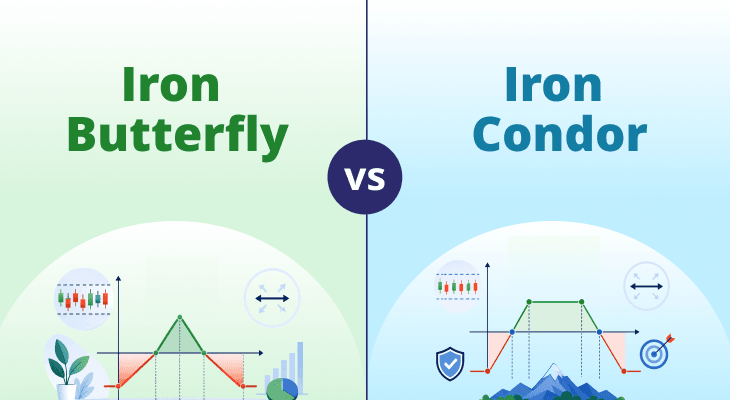
Iron Butterfly vs Iron Condor: Which Strategy Is Better?
August 19, 2026 | 0 mins read
Options trading is not always about predicting the next big market move. At times, the market trades within a narrow range, creating opportunities for strategies that benefit from stability rather than direction. Two of the most widely used neutral strategies are the iron butterfly strategy and the iron condor options strategy. While both strategies use four option contracts and defined risk, they do not behave in the same way. Differences in strike selection, profit range, and risk-reward dynamics can significantly affect trading outcomes. Understanding the difference between an iron condor and an iron butterfly can help you select a strategy that matches your market expectations and trading objectives.

Iron Condor Strategy
August 19, 2026 | 0 mins read
Markets do not always trend strongly. At times, prices remain within a narrow range, making directional trades more challenging. The iron condor strategy is designed for these market conditions. It doesn’t rely on a bullish or bearish outlook. It aims to generate returns when the underlying asset remains within a predefined price range. With clearly defined risk and reward, it has become a widely used approach among traders looking to capitalise on range-bound markets while maintaining controlled exposure.
FAQ
Maximum loss = (cost price of asset − strike price of put) + premium paid. Multiply by the number of shares.