

May 21, 2026 | 16 min read
Stock Market Glossary - Key Stock Market Terms and Terminology
Navigating the stock market can feel overwhelming, especially when you encounter unfamiliar phrases and technical expressions. Understanding basic stock market terminology is essential if you want to invest confidently and make informed financial decisions. Whether you are a new investor exploring how shares work or someone who wants to refine their knowledge, this detailed stock market glossary will help you decode the language used in investing, trading, and financial analysis.
This guide explains crucial stock market terms in simple, clear, and beginner-friendly language. Each section covers a specific category such as market phases, financial ratios, trading concepts, technical indicators, and more. As you explore this glossary, you will learn how different elements of the market work together, how professionals interpret trends, and how investors choose products suited to their goals.
What Is the Stock Market?
The stock market is a platform where buyers and sellers trade ownership units of publicly listed companies. These ownership units are called shares or stocks. When a company wants to raise money, it issues shares to the public. Investors then buy and sell these shares through stock exchanges such as the NSE (National Stock Exchange) or BSE (Bombay Stock Exchange). Prices move constantly based on demand, supply, company performance, and broader economic conditions. The stock market functions as a marketplace that connects businesses needing capital with investors seeking opportunities to grow their wealth.
Why Learn Stock Market Terminology?
Learning stock market terminology helps you make informed decisions, analyse investments correctly, and understand market behaviour. When you know the meaning of terms like market order, beta, P/E ratio, or margin trading, you can interpret financial news, research reports, and stock charts with confidence. This knowledge prevents costly mistakes and helps you choose products that match your financial goals and risk tolerance. An informed investor does not rely on guesswork but on clear understanding and structured analysis.
Stock Market Glossary
Below is an extensive glossary of key stock market terms arranged into simple, logical categories.
Market Phases and Trends
Understanding market phases and trends is important because your investment decisions should never rely on guesswork or emotions. Terms like bull market, bear market, and corrections help you interpret market mood objectively instead of reacting to short-term noise.
These concepts also prevent you from taking unnecessary risks. For instance, assuming the market will keep rising simply because it has risen recently is a common behavioural trap. Knowing the terminology gives you a clearer view of cycles, helping you position your portfolio wisely rather than getting caught on the wrong side of sentiment shifts.
Bull Market
A bull market refers to a long period during which share prices rise steadily. It usually reflects investor optimism, strong economic conditions, and positive company earnings. When investors expect future growth, they buy more shares, which increases demand and pushes prices higher. Bull markets encourage long-term investors because the overall market trend supports wealth creation.
Bear Market
A bear market is the opposite of a bull market. It occurs when stock prices fall for an extended period, generally by 20% or more. It indicates pessimism, economic slowdown, or weak company performance. Investors tend to sell shares to avoid losses, which causes further price declines. Bear markets can be stressful, but they also offer long-term investors opportunities to buy quality stocks at lower prices.
Market Bubble
A market bubble forms when share prices rise much faster than the underlying fundamentals of companies. Prices climb mainly due to excessive speculation rather than genuine business performance. When the bubble bursts, prices fall sharply, causing large losses for investors. Famous examples include the dot-com bubble in the early 2000s.
Market Correction
A market correction is a short-term decline, typically between 10% and 20%, after a period of rapid gains. Corrections are considered healthy for the market because they bring prices back to realistic levels. They help prevent the formation of bubbles and allow long-term investors to buy quality stocks at a fair valuation.
Market Timing
Market timing refers to attempting to buy shares at low prices and sell them at high prices by predicting short-term movements. While it may sound appealing, timing the market is extremely difficult because price movements depend on many unpredictable factors. Most financial experts recommend long-term investing rather than relying on market timing.
Overbought / Oversold
These terms are used in technical analysis. A stock is considered overbought when its price rises rapidly and may be due for a pullback. It becomes oversold when the price falls too sharply and might rise soon. Indicators such as the Relative Strength Index (RSI) help traders identify overbought and oversold levels.
Market Sentiment
Market sentiment refers to the overall mood or attitude of investors. It can be positive, negative, or neutral. Sentiment influences buying and selling decisions even when fundamentals remain stable. For example, strong positive sentiment may push prices higher even if earnings do not change significantly.
Types of Investment Products
Every financial product comes with its own risk, return potential, and purpose. Terms related to stocks, bonds, ETFs, mutual funds, and derivatives help you understand how each instrument behaves and what role it plays in your portfolio.
Without this knowledge, you might choose products that don’t match your goals or risk profile. Understanding product-specific terminology ensures you invest in what suits you, not simply what appears popular. It builds the foundation for constructing a portfolio that aligns with your financial objectives.
Stocks
Stocks represent ownership in a company. When you buy a stock, you become a shareholder and are entitled to a portion of the company’s profits. Share prices move based on company performance, market events, and economic factors.
Mutual Funds
Mutual funds pool money from many investors to buy a diversified portfolio of stocks, bonds, or other assets. They are managed by professional fund managers and are ideal for investors who want diversification without selecting stocks individually.
ETFs (Exchange-Traded Funds)
ETFs are similar to mutual funds but trade on the stock exchange like individual stocks. They offer diversification, lower costs, and the ability to buy and sell throughout the day.
Futures
Futures are contracts that allow buyers and sellers to agree on the price of an asset today for delivery at a future date. They are commonly used for commodities, currencies, and indices. Futures carry higher risk and are more suitable for experienced traders.
Options
Options give investors the right, but not the obligation, to buy or sell an asset at a specific price before a certain date. Call options allow buying, while put options allow selling. Options are used for hedging and speculative trading.
Derivatives
Derivatives derive their value from underlying assets such as stocks, bonds, or commodities. Futures and options are common examples. They can be useful but involve significant risk.
Bonds
Bonds are debt instruments issued by governments or companies to raise funds. When you buy a bond, you lend money to the issuer and receive interest in return. Bonds are generally considered safer than stocks.
Key Trading Concepts
Key trading concepts explain how traders take positions, manage risk, and respond to market movements. Understanding ideas such as long positions, short selling, margin trading, and arbitrage is essential because these strategies carry both potential rewards and significant risks. Without clarity, you might misuse leverage or misinterpret price movements, leading to unnecessary losses.
These terms help you understand how active market participants operate so you can make informed decisions and avoid taking trades beyond your comfort or skill level.
Long Position
Taking a long position means buying a stock with the expectation that its price will rise. Most regular investors take long positions.
Short Selling
Short selling allows investors to profit from falling prices. It involves borrowing shares, selling them at the current price, and buying them back later at a lower price. It carries a high risk.
Day Trading
Day trading refers to buying and selling financial instruments within the same trading day. Traders aim to profit from small price movements. It requires experience and high discipline.
Margin Trading
Margin trading allows investors to borrow money from brokers to trade larger amounts. It increases both potential profits and potential losses.
Algorithmic Trading
Algorithmic trading uses computer programmes to execute trades automatically based on predefined rules. It helps complete trades faster and reduces human error.
Arbitrage
Arbitrage involves taking advantage of price differences in the same asset across different markets. Traders buy where the price is lower and sell where it is higher.
Market Mechanics and Orders
Market mechanics and order types determine how your trades are executed. Terms such as market orders, limit orders, liquidity, volume, and bid–ask spread directly affect the price you pay or receive. Many beginners lose money because they unknowingly place the wrong type of order or don’t understand how pricing works.
Learning these terms ensures you enter and exit positions correctly, avoid slippage, and maintain control over your trade execution. This knowledge is crucial whether you trade actively or invest passively.
Market Order
A market order instructs the broker to buy or sell shares immediately at the best available price.
Limit Order
A limit order allows you to specify the exact price at which you want to buy or sell. It gives more control but may result in the order not being executed if the price is not reached.
Bid, Ask, and Bid-Ask Spread
The bid is the highest price buyers are willing to pay. The ask is the lowest price sellers are willing to accept. The difference between the two is the bid-ask spread.
Liquidity
Liquidity refers to how easily an asset can be bought or sold without affecting its price. Highly liquid stocks trade frequently and have tight spreads.
Volume
Volume indicates how many shares are traded during a specific period. Higher volume shows stronger interest and greater market activity.
Ticker Symbol
A ticker symbol is a unique series of letters representing a listed company. For example, Reliance Industries trades under the ticker symbol RELIANCE.
After-Hours Trading
After-hours trading allows investors to buy and sell stocks outside regular market hours. Prices can be more volatile due to lower liquidity.
Financial Ratios and Indicators
Fundamental terms like EPS, P/E ratio, book value, and ROE help you evaluate whether a company is financially sound. No single ratio tells the entire story, but together they give you a balanced picture of profitability, stability, and long-term potential.
Using these metrics wisely prevents you from investing purely based on hype. Understanding fundamentals encourages you to make evidence-based decisions rather than emotional or speculative ones.
P/E Ratio (Price-to-Earnings)
The P/E ratio measures how much investors are willing to pay for each unit of earnings. It helps assess whether a stock is overpriced or undervalued.
Earnings Per Share (EPS)
EPS shows how much profit a company earns per share. A higher EPS usually signals a stronger business.
Dividend Yield
Dividend yield calculates the annual dividend as a percentage of the stock price. It helps investors identify income-generating stocks.
Profit Margin
Profit margin measures how much profit a company generates relative to its revenue. Higher margins reflect strong operations.
Debt-to-Equity Ratio
This ratio compares a company’s debt to its equity. It indicates how much debt the company uses to finance its assets. Lower ratios are generally safer.
Current Ratio
The current ratio assesses a company’s ability to meet short-term liabilities using short-term assets.
Beta
Beta measures a stock’s volatility compared to the overall market. A beta above 1 indicates higher volatility.
Risk-Adjusted Return
This metric evaluates returns relative to the amount of risk taken. It helps investors compare different investments fairly.
Expense Ratio
The expense ratio represents the cost of managing a mutual fund or ETF. Lower ratios mean better value for investors.
Technical Analysis Terminology
Technical analysis terms like moving averages, candlestick patterns, VWAP, and support and resistance help you interpret price patterns and understand market psychology. While charts cannot predict the future with certainty, they reveal useful behaviour and trends.
Knowing these terms protects you from random, emotion-driven decisions. They help you identify potential entry and exit points, manage risk better, and understand how short-term traders influence price movements.
Candlestick Chart
A candlestick chart visually represents price movements for a given period. Each candle shows the opening, closing, high, and low prices.
Moving Average
A moving average smoothens price data to identify long-term trends. Common types include the 50-day and 200-day moving averages.
Golden Cross / Death Cross
A golden cross forms when a short-term moving average crosses above a long-term moving average, indicating potential upward momentum. A death cross signals the opposite trend.
Head and Shoulders Pattern
A head-and-shoulders pattern signals a potential trend reversal. It is used by traders to predict changes in price direction.
Resistance and Support Levels
Support represents a price level where buyers typically step in. Resistance represents a level where sellers emerge. These levels help traders anticipate price movements.
Volume Weighted Average Price (VWAP)
VWAP shows the average price a stock has traded at during the day, weighted by volume. It is used to analyse intraday trends.
Investment Strategies and Investor Types
Investment strategies such as value investing, growth investing, diversification, and asset allocation help you build a portfolio that suits your goals and risk appetite. No single strategy works for everyone, and blindly following market trends can expose you to unnecessary risks.
Learning these terms ensures you choose an approach that aligns with your financial objectives. It also helps you stay consistent, disciplined, and realistic, instead of jumping from one strategy to another based on short-term market noise.
Value Investing
Value investing involves buying undervalued stocks trading below their intrinsic value. It focuses on long-term growth.
Growth Stocks
Growth stocks belong to companies expected to grow earnings quickly. They often reinvest profits instead of paying dividends.
Blue Chip Stocks
Blue chip stocks are financially strong, stable, and well-established companies with a history of reliable performance.
Diversification
Diversification spreads investments across different sectors to reduce risk.
Asset Allocation
Asset allocation determines how much of your portfolio goes into stocks, bonds, or other assets. It helps balance risk and return.
Risk Tolerance
Risk tolerance refers to how much volatility an investor is comfortable with.
Equity Income
Equity income strategies focus on stocks that pay regular dividends.
Dividend Reinvestment Plan (DRIP)
DRIPs allow investors to automatically reinvest dividends to buy more shares, helping wealth compound over time.
Market Regulations and Entities
Market regulations exist to maintain fairness, transparency, and investor protection. Knowing terms related to SEBI, stock exchanges, intermediaries, and market makers helps you understand how the market is governed and how your interests are safeguarded.
This knowledge also helps you identify credible platforms, avoid fraudulent schemes, and understand the checks and balances that guide trading activities. It ensures you operate within a regulated, trustworthy environment.
The Role of SEBI
SEBI regulates the Indian securities market. It protects investor interests, ensures transparency, and oversees market participants.
Stock Exchanges in India (NSE, BSE)
The NSE and BSE are major exchanges where shares are traded. They provide platforms for price discovery and liquidity.
Financial Intermediaries
These include brokers, registrars, depositories, and fund managers. They help investors transact, record, and manage their investments.
Market Makers
Market makers provide liquidity by continuously offering to buy and sell specific stocks.
Economic Indicators
Indicators such as GDP growth, inflation, and interest rates influence stock prices. Investors monitor them to understand economic trends.
Market Milestones and Limits
Market milestones such as 52-week highs, all-time lows, and circuit limits help you gauge market sentiment and extreme price movements. These indicators often influence how traders and investors behave, especially during volatile periods.
Understanding these terms ensures you do not panic when the market hits such levels or misinterpret them as signals to buy or sell. They give context to price action and help you approach investing with greater patience and discipline.
52-Week High
The 52-week high is the highest price a stock has traded at during the past year. It helps investors understand how strong or popular the stock has been recently. When a stock nears its 52-week high, it often signals positive momentum, but it may also mean the stock is becoming expensive. Beginners should use this level as a reference point, not as a direct buy or sell signal.
52-Week Low
The 52-week low is the lowest price a stock has touched in the past year. It shows periods when the stock was out of favour or under pressure. While some investors see this as a bargain opportunity, it can also indicate deeper problems within the company or sector. It’s important to check why the price fell instead of assuming it is cheap.
All-Time High (ATH)
An all-time high is the highest price a stock has ever reached since it was listed on the stock exchange. Crossing an ATH often attracts attention because it indicates strong performance and rising investor confidence. However, high prices can also make the stock more sensitive to market corrections. Beginners should pair this information with fundamentals before investing.
All-Time Low (ATL)
An all-time low is the lowest price a stock has ever recorded since it began trading. While this may appear like a bargain, it can also signal serious business challenges, negative sentiment, or structural issues. Investors should carefully analyse the reason behind the drop before considering any investment near an ATL.
Upper and Lower Circuit
Upper and lower circuits are price limits set by stock exchanges to control extreme volatility in a stock. If a stock hits the upper circuit, trading may halt because the price has risen too quickly. If it hits the lower circuit, trading may stop due to a rapid fall. These limits protect investors from sudden, unpredictable price swings and give the market time to stabilise. Beginners should be cautious because circuit-hit stocks can be difficult to buy or sell quickly.
Liquidity Trap
A liquidity trap occurs when people prefer holding cash instead of investing or borrowing, even if interest rates are very low. This usually happens during periods of economic uncertainty or fear. Because money stays idle, the economy struggles to grow despite policy measures. For stock market investors, a liquidity trap often leads to weak sentiment, lower market participation, and slower recovery in share prices.
Commonly Used Stock Market Abbreviations
Abbreviation | Meaning | Comment |
|---|---|---|
IPO | Initial Public Offering | Company’s first sale of shares to the public. |
Net Asset Value | Used for mutual funds/ETFs; value of total assets minus liabilities divided by units. | |
Compound Annual Growth Rate | Measures the growth rate of an investment over multiple years. | |
P/B Ratio | Compares the market value of a stock to its book value (assets minus liabilities). | |
Return on Equity | Indicates how efficiently a company uses shareholders’ equity to generate profit. | |
FII | Foreign Institutional Investor | Non-domestic institutions investing in a country’s financial markets. |
DII | Domestic Institutional Investor | Domestic large institutions, like mutual funds, insurance companies. |
ETF | Exchange-Traded Fund | A fund that tracks an index and is traded like a stock. |
EPS | Earnings Per Share | Company’s profit divided by number of shares outstanding. |
ADR | American Depositary Receipt | A way for foreign company's shares to be traded in the US markets. |
CFD | Contract for Difference | A derivative product where profit/loss is based on price movement without owning the underlying. |
Return on Assets | Measures how profitable a company is relative to its total assets. | |
FY | Financial Year | The accounting period for a company (commonly 1 April to 31 March in India).8 |
MCap | Total market value of a company’s outstanding shares (price × number of shares). | |
OPM | Operating Profit Margin | Percentage of revenue left after operating expenses (before interest/taxes). |
Conclusion
Learning key stock market terms gives you the confidence to analyse opportunities, understand risks, and make smarter investment decisions. With the right knowledge, you can interpret market movements, study financial ratios, and choose products that match your goals more effectively. A strong grasp of stock terminology also helps you avoid common mistakes that many new investors make.
If you are looking for a simple, beginner-friendly way to apply this knowledge in real investing, platforms like m.Stock by Mirae Asset offer a smooth, reliable, and cost-effective experience. With ₹10 brokerage on all trades and a user-friendly interface, m.Stock makes navigating the stock market far easier for new and experienced investors alike.
More Related Articles
How Traders Use Maximum Drawdown to Manage Portfolio Risk?
 August 19, 2026 | 0 mins read
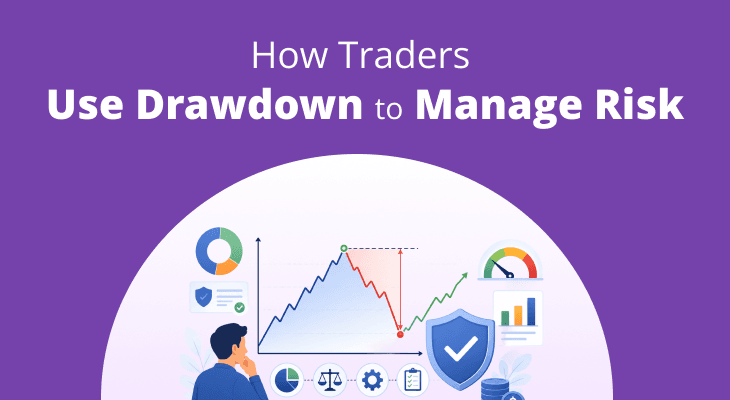
When evaluating an investment or trading strategy, returns usually receive the most attention. However, returns alone do not tell investors how much risk was taken to achieve them. Two portfolios may deliver the same annual return, but one may have experienced far steeper losses during market downturns. This is where max drawdown becomes useful. It measures the largest decline in the value of a portfolio, trading account, or investment from its highest point to its lowest point before a new peak is reached. Instead of focusing only on profits, it shows the worst historical loss an investor would have experienced by staying invested.
Iron Butterfly vs Iron Condor: Which Strategy Is Better?
August 19, 2026 | 0 mins read
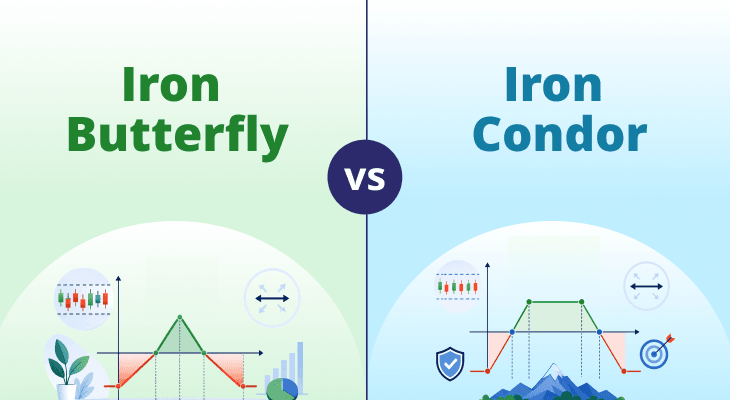
Options trading is not always about predicting the next big market move. At times, the market trades within a narrow range, creating opportunities for strategies that benefit from stability rather than direction. Two of the most widely used neutral strategies are the iron butterfly strategy and the iron condor options strategy. While both strategies use four option contracts and defined risk, they do not behave in the same way. Differences in strike selection, profit range, and risk-reward dynamics can significantly affect trading outcomes. Understanding the difference between an iron condor and an iron butterfly can help you select a strategy that matches your market expectations and trading objectives.

Iron Condor Strategy
August 19, 2026 | 0 mins read
Markets do not always trend strongly. At times, prices remain within a narrow range, making directional trades more challenging. The iron condor strategy is designed for these market conditions. It doesn’t rely on a bullish or bearish outlook. It aims to generate returns when the underlying asset remains within a predefined price range. With clearly defined risk and reward, it has become a widely used approach among traders looking to capitalise on range-bound markets while maintaining controlled exposure.
FAQ
No. Beginning with the most commonly used terms, such as bear market, bull market, dividend, P/E ratio, and liquidity, is sufficient. As you invest and trade, you will encounter and learn the other terms gradually. Learning incrementally is more effective than trying to know everything at once.